
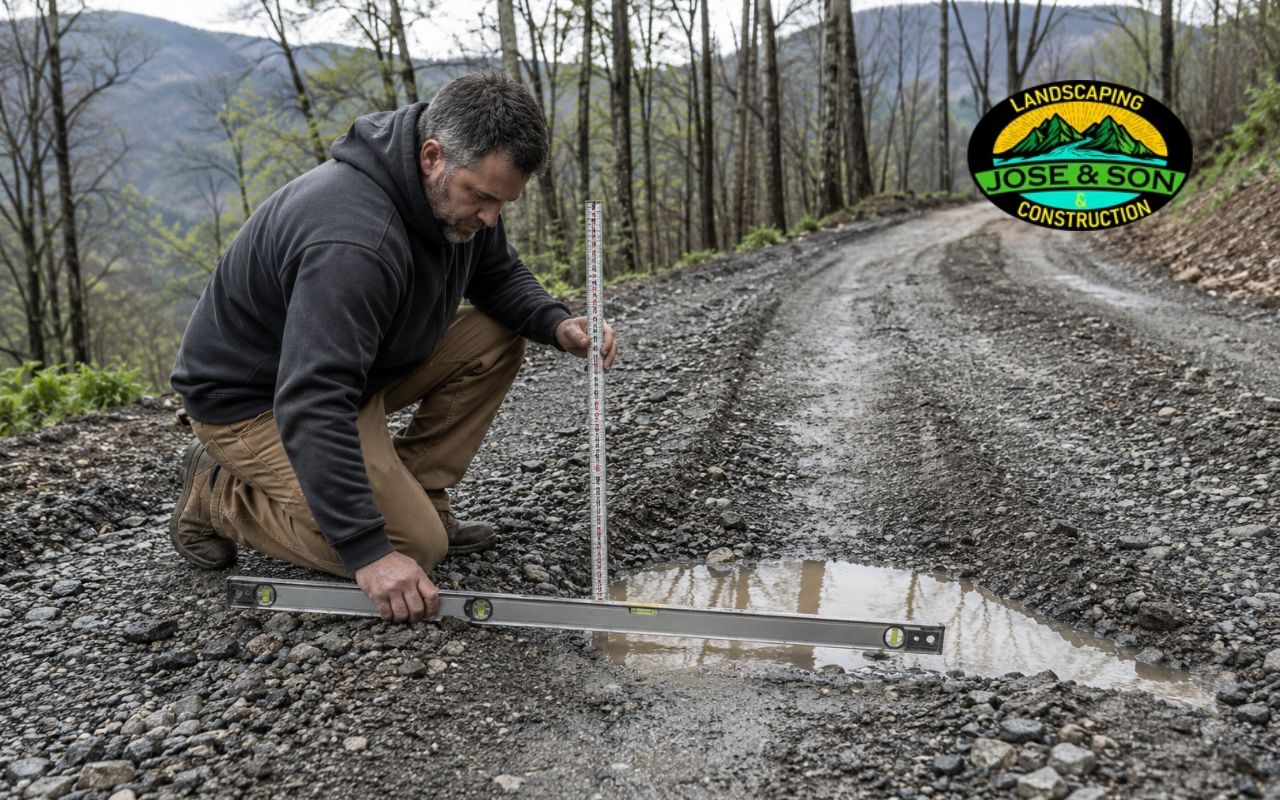
Essential Gravel Driveway Maintenance Tips for Lasting Results
Gravel driveway maintenance becomes easier when you follow a simple routine. A smooth surface protects your property, improves daily access, and reduces the risk of deeper damage after heavy rain or regular vehicle use.
At Jose and Son Landscaping and Construction, we know that small problems can grow quickly. Therefore, regular checks, smart repairs, and better water flow help keep your driveway safe, neat, and ready for every season.
Start With A Careful Gravel Driveway Condition Check
Begin by walking the full driveway and looking for potholes, low spots, loose edges, and thin gravel areas. Mark each problem so you can plan repairs in the right order. This first step gives your gravel driveway maintenance plan a clear starting point and helps you avoid wasted work.
Next, check whether water stays on the surface after rain. This step makes gravel driveway care more effective because you can fix drainage issues before they wash away more material.
- Look for ruts, dips, and soft sections.
- Check edges for loose or spreading gravel.
- Mark places where water collects or flows badly.
Clear Weeds Before They Weaken The Gravel Surface
Weeds may look harmless, but their roots can loosen the gravel and create weak spots. Pull small weeds by hand, and remove larger growth with a safe product made for gravel areas.
For problem zones, place landscape fabric under fresh gravel. This barrier blocks light while still letting water pass through, so the driveway stays cleaner and needs less repeated work. As a result, gravel driveway maintenance becomes simpler during warm and wet months.
Repair Driveway Ruts Before They Become Deeper Problems
Fixing driveway ruts starts by moving loose gravel from high areas into low sections. Use a strong rake or grading tool, then shape the surface so vehicles can pass without making the damage worse.
Add matching gravel when the surface is too thin. Afterward, compact the repair so the new material connects with the old layer and stays firm under regular traffic. Proper compaction is a key part of gravel driveway maintenance because it limits fast shifting.
- Loosen the damaged area before adding gravel.
- Fill the rut in even layers.
- Compact each section for better strength.
Improve Water Flow With Better Driveway Drainage Planning
Good gravel driveway drainage keeps water moving away from the travel path. A slight crown in the center helps rain flow toward the sides instead of settling into low areas.
Clear leaves, soil, and stones from side ditches each season. For larger drainage work, our construction service options can support wider property improvements that protect the driveway base.
Choose Gravel That Stays Firm Under Daily Traffic
Angular crushed stone usually works better than smooth round gravel because the pieces lock together. This creates a stronger surface and reduces movement under cars, trucks, and changing weather.
At Jose and Son Landscaping and Construction, we recommend using gravel that matches the current surface. Consistent size and texture make repairs blend better and support stronger driveway surface maintenance.
- Use angular stone for better grip.
- Match new gravel with the old material.
- Avoid decorative stones in busy areas.
Grade The Gravel Surface For A Smoother Drive
Regular grading spreads gravel evenly and removes small ridges before they become serious. Most driveways need this work at least once each year, although heavy traffic may require more frequent attention.
Slightly damp gravel is easier to shape and creates less dust. For related outdoor upgrades, our landscaping support for outdoor spaces can help connect the driveway with a cleaner, more finished property layout.
Frequently Asked Questions
How often should gravel driveways be graded?
Most gravel driveways should be graded once a year. However, busy driveways or areas with heavy rain may need grading more often to keep the surface level.
What causes ruts in a gravel driveway?
Ruts usually form because of repeated traffic, poor drainage, loose gravel, or a weak base. Early repairs help stop them from becoming deeper and more costly.
Can drainage problems damage the gravel base?
Yes. Standing water can soften the lower layers and wash away gravel. Better slope, clear ditches, and steady upkeep protect the base from long-term damage.
What gravel works best for driveway repairs?
Crushed angular gravel is often the best choice because it locks together. Try to match the size and type already used on your driveway.
When should professionals inspect the driveway?
Professional help is useful when ruts return quickly, drainage is poor, or the base feels soft. Our team at Jose and Son Landscaping and Construction can review the problem and explain practical next steps.
Keep Your Gravel Driveway Strong Through Every Season
Winter snow, spring rain, and summer traffic all affect the surface. Use gentle snow removal methods, keep drains open, and replace lost gravel before small issues spread across larger areas.
Consistent gravel driveway maintenance protects both function and curb appeal. For local project support, review our Mitchell County construction services or reach out our team about your driveway for clear guidance.